Brand: Genesis
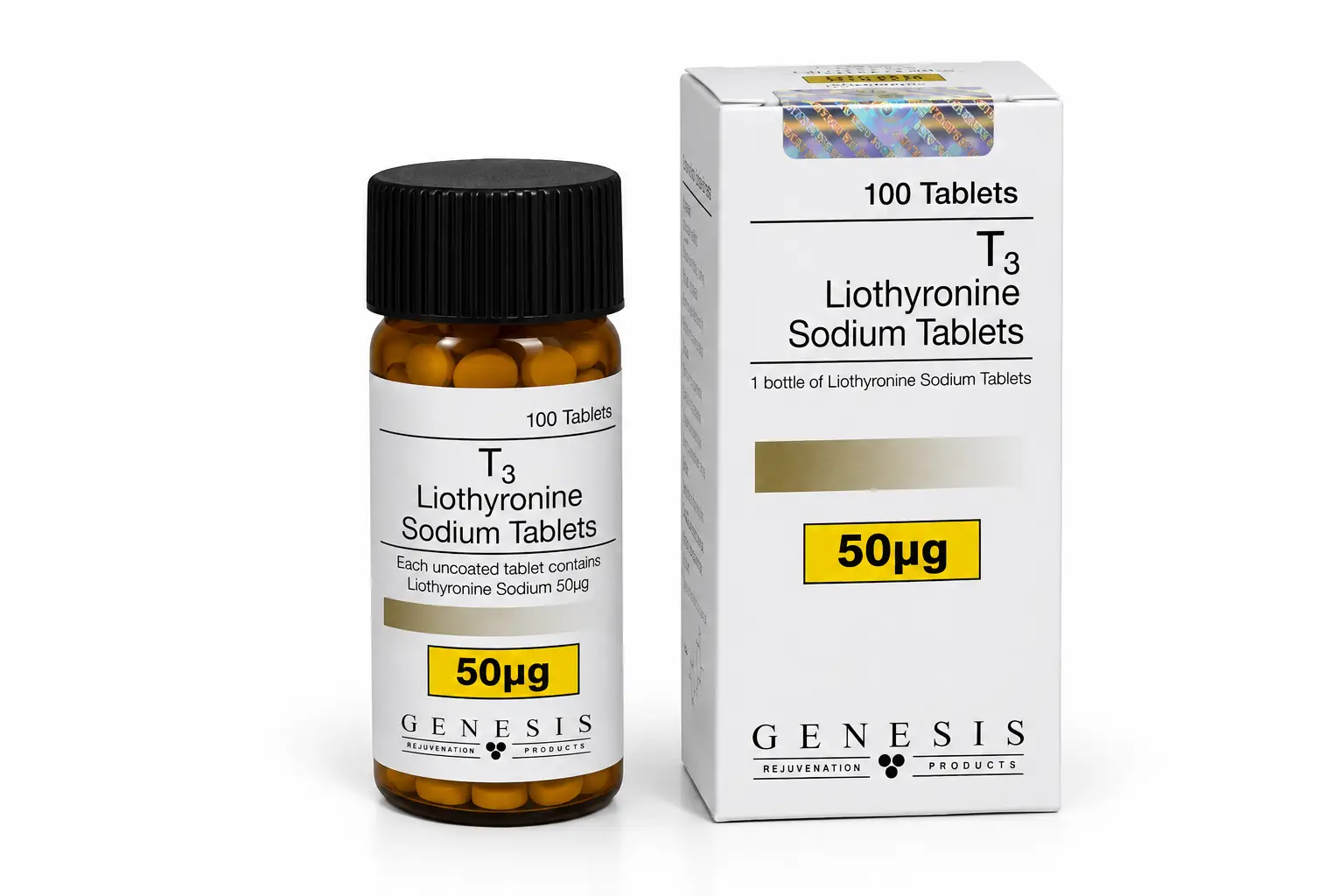
T3 - Genesis is a tablet that contains liothyronine sodium, made by Genesis in Singapore. T3 and T4 are the two thyroid hormones. They raise the body’s oxygen use and heat production, support growth and development, and help regulate how the body handles carbohydrates, fats and protein. T4 is an inactive form that the body converts into T3. Liothyronine skips that step, so it acts faster. In medicine, it’s prescribed for hypothyroidism and for the rare emergency of myxedema coma. In the sports world, it’s discussed for its ability to speed up metabolism during diets. The Cytomel prescribing information is clear that thyroid hormones should not be used for weight loss.
T3 - Genesis is liothyronine sodium, a synthetic form of the thyroid hormone T3. It isn’t a steroid. Because it’s already in the active form, the body doesn’t need to convert it, and it binds to thyroid receptors in cells straight away. Each tablet contains 50 mcg, which is the highest strength used in medicine, twice the common 25 mcg tablet. The product is supplied as an oral tablet.
It is a liothyronine sodium tablet from Genesis, Singapore, with 50 mcg per tablet in a pack of 100.
No. It’s a thyroid hormone. It doesn’t build muscle, and it works by raising the body’s metabolic rate.
It’s used to treat hypothyroidism, the condition of an underactive thyroid, and myxedema coma, by replacing the missing thyroid hormone.
No. The Cytomel label carries a boxed warning against using thyroid hormones for obesity or weight loss, because larger doses can be dangerous.
Yes. When T3 comes from outside, the brain reduces the signal that tells the thyroid to work, so natural output drops. It usually recovers after stopping, but this takes time.
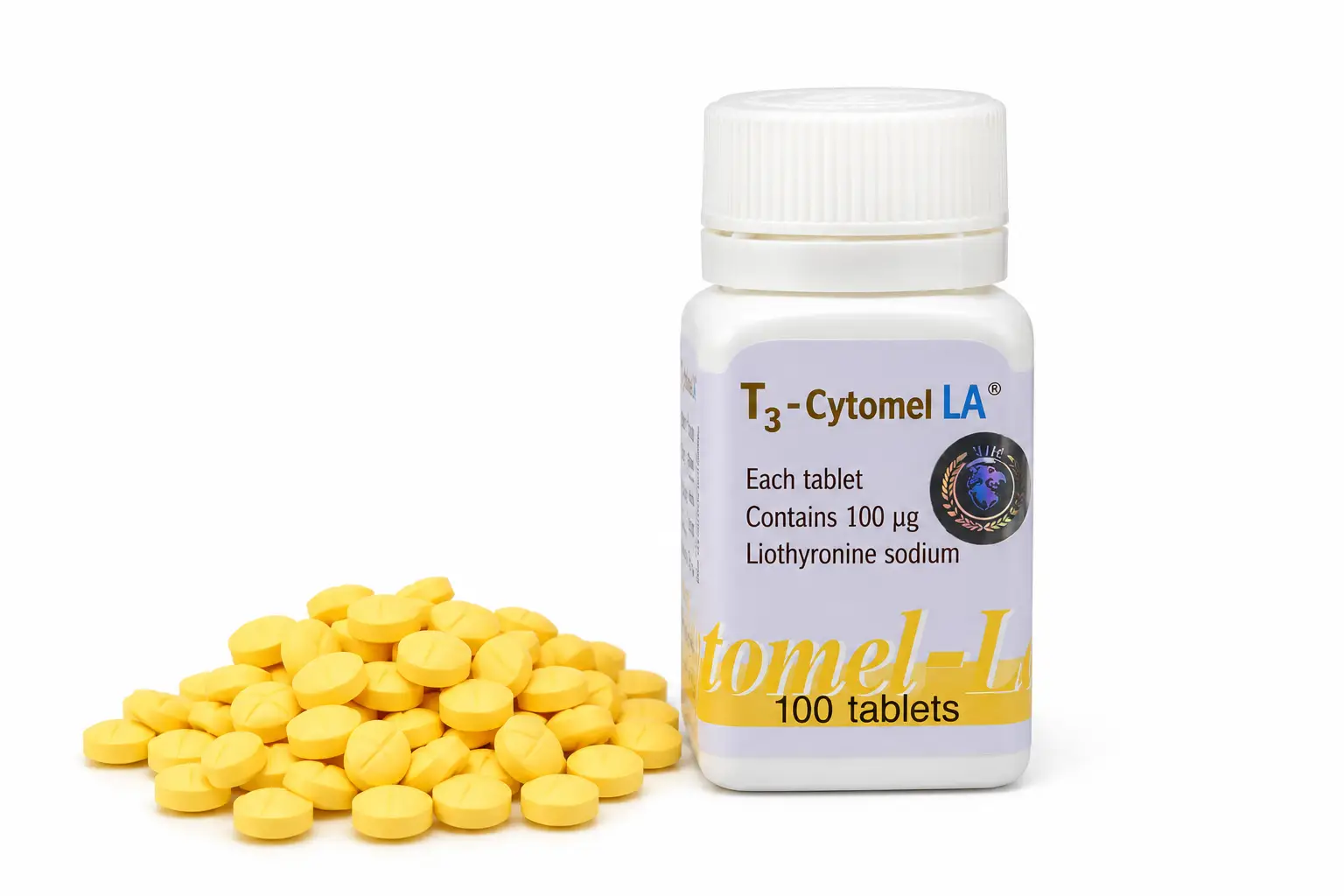
Both contain liothyronine sodium and share the same pharmacology and half-life. The differences are the manufacturer, the strength per tablet and the pack size.
Liothyronine (Cytomel) is approved by the FDA for hypothyroidism, under prescription. This specific Genesis product is not an FDA-approved medicine.
No. Liothyronine is a prescription medicine in most countries, and non-prescribed use is regulated.

Explore trusted products, clear information and support for your fitness journey.
Subscribe Now
Log in to track orders and check out faster.
lock Your details are encrypted and never shared.